Rogaining: The Hidden Navigation Sport Mountain Athletes Love
Rogaining is the hidden sport mountain athletes love. Navigation racing that combines fitness and strategy.
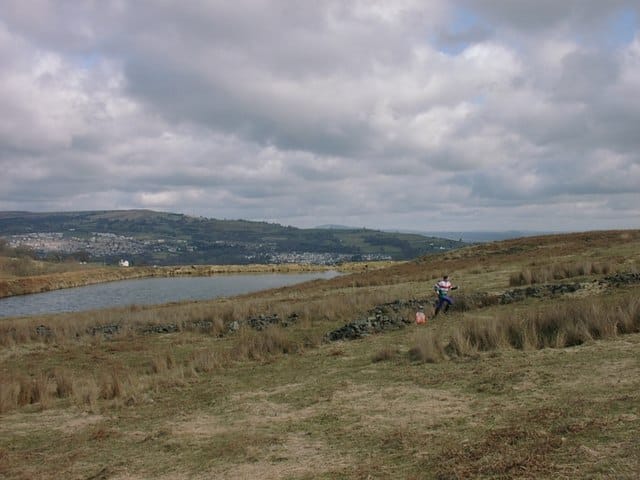
Rogaining is the hidden sport that mountain athletes love once they discover it. It's a navigation race: teams of 2-5 people cover as much distance as possible in a set time (typically 6, 12, or 24 hours) while collecting checkpoints on a map. No marked course. No GPS. Just map, compass, and legs.
The sport has a small but devoted following in Europe, Australia, and New Zealand. It's gaining in North America. For mountain athletes who enjoy problem-solving as much as physical effort, rogaining is a perfect combination. Here's how it works and why it's worth trying.
What Rogaining Is
Race format: 6, 12, or 24 hours. Start at a central campsite. Navigate to checkpoints scattered across 1,000 km² of terrain. Each checkpoint has a point value (higher values for checkpoints in harder-to-reach locations). At the end of the time limit, return to camp. Team with most points wins.
You can go anywhere on the map. You choose your route based on which checkpoints you can reach given the terrain, your fitness, and the time available. Route planning is as important as physical fitness.
The challenge is optimization: you can't reach every checkpoint in the time limit. You must strategize. Go for a few distant high-value checkpoints or many nearby lower-value ones? Take difficult terrain for shorter distance or easier terrain for longer distance? The math matters.
Typical race formats
- 6-hour event: 30-50 km typical distance
- 12-hour event: 50-80 km typical
- 24-hour event: 80-150 km typical
- World Championships: 24-hour, high-level athletes
The Navigation Skill
Topographic map reading: you must be able to read contour lines, identify terrain features, and match them to reality. This takes practice. Most mountain athletes overestimate their map reading until they're lost in fog at 3am.
Compass bearing: walking on a bearing across terrain. Critical for navigation in low visibility. Practice this before the race.
Pacing: estimating distance covered by counting steps or estimating time. Important when landmarks are unclear.
Terrain association: matching what you see around you to the map. "The valley is on my left, the ridge is ahead, this hill is where the map shows this contour." Constant verification.
Skills are developed by orienteering first. Orienteering is the shorter, more controlled cousin of rogaining. Most serious rogainers started with orienteering to build navigation skills.
Team Dynamics
Rogaining teams are 2-5 people. The team must stay together (within shouting distance usually, some events allow different). This forces cooperative navigation, shared pacing, and mutual support.
Role division: one person navigates at a time while others move efficiently. Trade off. The navigator reads the map and chooses lines. The others focus on moving.
Team pace: slowest member sets the pace. Match team members for fitness when possible. Mismatched teams either leave faster members frustrated or slower members exhausted.
Communication: clear, specific. "We're heading to checkpoint 17, which is on the south side of the hill, about 300m from here." Not "let's go that way."
Route Planning Strategy
Pre-race planning: you get the map 1-4 hours before race start. Study it. Identify terrain features, water sources, difficult sections. Plan a preliminary route.
Value optimization: calculate point density in different areas. If one area has 10 checkpoints averaging 30 points each (300 total points over 10 km) and another has 20 checkpoints averaging 15 points each (300 total points over 20 km), the first is more efficient per km.
Time budget: 6-hour race means you need to return to camp by hour 6. Plan to finish with 20-30 minutes of buffer. You don't want to miss the cutoff.
Re-plan mid-race: conditions change, you cover terrain slower or faster than expected, weather shifts. Be willing to abandon your plan and take a different route based on current reality.
Training for Rogaining
Running fitness: important. You need to cover terrain fast. 50km pace for 6 hours, 80km for 12 hours, 100km+ for 24 hours.
Power hiking: most rogaining terrain includes climbs. Practice power hiking with a pack.
Navigation practice: orienteering events (shorter, more formal) build navigation skills. Do these regularly.
Mental endurance: 24-hour events require sustained mental performance. Train your mental stamina by doing long training runs with navigation practice.
Race-specific: do a "practice rogaine" by creating your own checkpoints on a map and navigating to them. Self-scored. Teaches route selection under pressure.
Training volume by target
- 6-hour rogaine: 8-12 hours/week
- 12-hour rogaine: 12-16 hours/week
- 24-hour rogaine: 16-20 hours/week
Equipment and Gear
Required: map, compass, timing device (watch), whistle, food, water. Each event may have specific requirements.
Clothing: layers appropriate for conditions. Rogaining often involves temperature changes through the day. A light jacket is always useful. Rain gear if rain possible.
Shoes: trail runners. Not road shoes (terrain varies too much). Not hiking boots (too slow). A solid pair of trail runners.
Pack: 10-15L hydration pack. Big enough for gear, water, food. Not so big it weighs you down.
Lighting: headlamp for 12-hour and 24-hour events. Backup battery essential.
Hydration: 2L minimum for 6-hour, 3L+ for longer. Water sources on the map may or may not be available.
Required gear checklist
- Topographic map (provided by race)
- Compass (thumb compass or baseplate)
- Watch/timer
- Whistle
- First aid basics
- Hydration (water + electrolytes)
- Food (snacks for every hour)
- Rain jacket (weather-dependent)
- Headlamp + spare battery (longer events)
- Mobile phone (off unless emergency)
Food and Pacing
Nutrition strategy: 150-250 calories per hour while moving. Mix of carbs and simple proteins.
What works: bars, gels, cheese cubes, trail mix, peanut butter on crackers. Foods you can eat while walking.
Water: drink regularly, not all at once. 500ml per hour in moderate conditions, more in heat.
Pacing: Zone 2 (conversational) most of the time. You're racing for hours, not minutes. Sustained effort wins. Surges cost too much energy.
Mental Game
Navigation mistakes happen to everyone. Don't panic. Stop, take a breath, verify where you are, re-plan.
The temptation to bash ahead and find yourself is strong. Resist it. Taking 5 minutes to confirm position saves 30 minutes of wrong-way walking.
Fatigue distorts judgment. Plan to navigate carefully even when tired. The mistakes you make at hour 10 are worse than the ones at hour 2.
Team support matters. When one person hits a low, the others help. Everyone bonks at some point in a long race.
Race Day Execution
Pre-race: eat 1-2 hours before start. Hydrate. Study map thoroughly.
First hour: controlled pace. Find your rhythm. Don't race the first hour - you have 5-23 more to go.
Mid-race: settle in. Execute the plan. Adjust as needed based on how you're feeling and the terrain.
Final hours: if you're ahead of schedule, add checkpoints. If you're behind, cut planned checkpoints. Don't miss the cutoff trying to get one more checkpoint.
Beyond the First Event
First event: finish within the time limit. Don't worry about placing. Learn what the sport is like.
Second event: try to improve your efficiency (points per km, or km per hour). Focus on navigation speed.
Advanced events: 24-hour, or international events. Target improvement in specific areas (technical terrain, night navigation, team coordination).
World Rogaining Championships: held every 2 years. 24-hour format. Top teams cover 180+ km with thousands of points. Elite physical fitness plus expert navigation.
Rogaining rewards combining skills. Fitness matters, navigation matters, strategy matters, team dynamics matter. Sports that require only one skill are boring by comparison. If you're a mountain athlete looking for a new challenge, give rogaining a try. You'll discover a discipline most runners never encounter, and a community of people who think the way you do.