Free Diving for Spearfishing: Safety and Progression
Spearfishing on a single breath combines physiology and skill. Here's how to approach it safely.
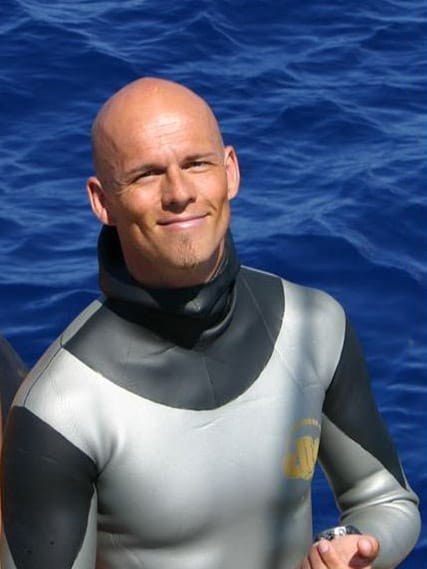
Free diving for spearfishing is a different sport than recreational free diving. You're not sightseeing at depth. You're stalking fish, holding position, and executing a kill shot - all on a single breath. The physiology is the same as competitive free diving. The skill requirements are different. Most divers who approach this sport incorrectly get hurt or get discouraged.
I've been free diving for spearfishing for four years in both tropical and cold-water conditions. The learning curve is real, the safety stakes are high, and the rewards are some of the best-tasting fish you'll ever eat. Here's how to actually approach this discipline.
Why Free Diving Over SCUBA
SCUBA creates bubbles that scare fish. Also, most spearfishing regulations require free diving only (SCUBA hunting is prohibited in many jurisdictions because of the unfair advantage over fish).
Free diving keeps you quieter, allows closer approaches, and demands the skill development that makes spearfishing interesting. It also limits you - you can't spend an hour at depth. You have seconds to minutes per dive.
The fish behave differently when you're free diving. They're curious about the solo swimmer. They'll approach. They'll pose. This behavior disappears with SCUBA because of the bubble noise.
Baseline Freediving Skills
Before hunting, develop baseline free diving skills:
- Static breath hold: 2 minutes minimum, ideally 3+ minutes
- Dynamic apnea: 50m underwater swim
- Depth dive: 10m minimum, ideally 15-20m
- Recovery breath technique: important for safety
These skills take 3-6 months of consistent practice. Don't start hunting before you have them. Hunting fish while approaching your breath-hold limit is how accidents happen.
Take a formal free diving course. AIDA and SSI offer Level 1 courses (1-2 days, $300-500). These teach safety, equalization, and breath-hold techniques.
The Hunting Descent
Hunting descent is different than recreational descent. You're moving slowly, watching for fish, maintaining neutral buoyancy, and staying calm. Your breath hold starts when you begin the descent and ends when you surface.
Typical hunting dive: descend slowly to 10-15m, look around for 30-60 seconds, ascend. Total dive time: 60-120 seconds. You hold your breath for the entire dive.
Equalize on the way down. Valsalva maneuver (pinch nose, gentle force) for recreational divers. Experienced free divers use Frenzel technique (tongue and throat pressure). Frenzel allows faster equalization but takes practice to master.
At depth: stay horizontal or head-down. Vertical position disrupts buoyancy and wastes energy. Scan for fish. Identify your target. Decide if it's worth a shot.
The Shot
Spearguns are the primary tool. European-style spearguns (Riffe, Mamba) are longer and more powerful. Tropical-style spearguns (Rob Allen, Hammerhead) are shorter and more maneuverable. Choose based on your primary fishing environment.
Typical shot distance: 2-4 meters. Closer is better - you can see the fish clearly, your shot is more accurate, and the spear has more power at close range.
Aim for the "kill zone" - behind the gill cover. A spot where the spear penetrates the heart or spine. This kills the fish quickly and prevents it from swimming away.
Shot rate: limited. Most spearguns have 1-3 shots per dive before you need to reload on the surface. Each shot is committed - you can't take it back if you miss.
Gun selection
- Small tropical fish: 80-90cm speargun, 1 band
- Medium reef fish: 100-120cm speargun, 2 bands
- Large pelagic: 140-160cm speargun, 3 bands
- Cold water big fish: custom pneumatic or railgun
Species and Regulations
Regulations vary dramatically by jurisdiction. Some places allow unlimited take of most species. Others have strict licenses, species lists, and size/bag limits.
Common regulations:
- License required (most places)
- Species-specific size minimums
- Bag limits (X fish per day)
- Protected species (no take)
- Seasonal closures
Check regulations before every trip. Fines for illegal take can be $200-5,000 depending on species and violation.
For beginners, target common species with liberal limits: tautog in New England, snapper in tropical areas, rockfish in Pacific Northwest. Avoid protected species entirely.
Safety: The Non-Negotiable Part
Free diving deaths happen. The primary cause is shallow water blackout - loss of consciousness on the ascent or at the surface due to CO2-driven breathing reflex triggering too late.
Safety rules:
- Never dive alone. Never.
- One-up-one-down system: your partner watches the surface while you're under
- Never chase a personal best depth or time when solo
- Surface with breath reserve - emergency capacity, not an empty tank
- Know the signs of shallow water blackout
Shallow water blackout symptoms: initial drowsiness, tingling, inability to think clearly. Then loss of consciousness. Your body doesn't warn you well.
My rule: surface with 20-30 seconds of capacity remaining. If I'm at 2:00 static, I surface no later than 1:30 on hunting dives.
Equipment Beyond the Gun
Wetsuit: 5-7mm for cold water, 3mm for warm. Specifically spearfishing wetsuits with loading pad on chest (for speargun band loading) and low-profile back (for streamlined movement).
Fins: long free diving fins (Cressi Gara, Beuchat Mundial). Provide more power per kick than regular fins.
Mask: low-volume free diving mask. Cressi Focus, Mares Pure Vision. Small mask reduces air usage for equalization.
Snorkel: simple J-tube snorkel. Avoid dry snorkels - they can cause problems on ascent.
Weight belt: rubber weights with quick-release belt. Adjusted for neutral buoyancy at 10-15m.
Dive knife: safety tool for entanglement with fishing line or kelp. $30-80.
Total equipment cost
- Wetsuit: $300-600
- Speargun: $250-800
- Fins: $100-200
- Mask + snorkel: $80-150
- Weight belt + weights: $100-150
- Total starter kit: $830-1,900
Training for Spearfishing
Physical training: swim training, breath-hold exercises, depth dives. 3-4 sessions per week.
Mental training: learning to stay calm at depth. Practice visualization and meditation. Panic is the enemy at depth.
Hunting skill: experience only. You learn fish behavior, approach angles, and shot timing by doing it. No shortcut.
Technique drills in pool:
- 50m dynamic apnea (underwater swim) x 10 repeats with 3 min rest
- Static breath holds with partner (safety critical)
- Equalization drills at various pool depths
Progression Path
Month 1-3: free diving training, no hunting. Build baseline fitness and skills.
Month 4-6: first hunting trips with guide. Target common species in calm conditions. Focus on technique, not results.
Year 2: independent hunting in familiar waters. Build experience with local species.
Year 3+: expand to new environments, deeper dives, larger species. Travel to hunting destinations.
The Cleanup and Use
After the hunt, proper fish handling matters. Bleed the fish immediately (cut the gills). Keep on ice in a cooler. The fish you eat tonight will taste noticeably better than fish that sat on the boat warm.
At home: clean, scale, fillet. YouTube has good instructional videos for each species.
Cook simply: fresh fish needs minimal intervention. Pan-sear, grill, or ceviche. The taste of fish you caught yourself is markedly different from market fish.
Free diving for spearfishing combines physical challenge, skill development, environmental intimacy, and real-world food. It's one of the most rewarding adventure sports because you harvest what you hunt. But it requires commitment to training, respect for safety, and ethical regard for the species you target. Done right, it's a lifelong pursuit. Done wrong, it hurts you or the fishery. Choose the right path.