Fastest Known Times (FKT): Setting Records on Known Routes
FKTs are the underground record-setting scene of trail running. Pick a route, run it fast, log your time.
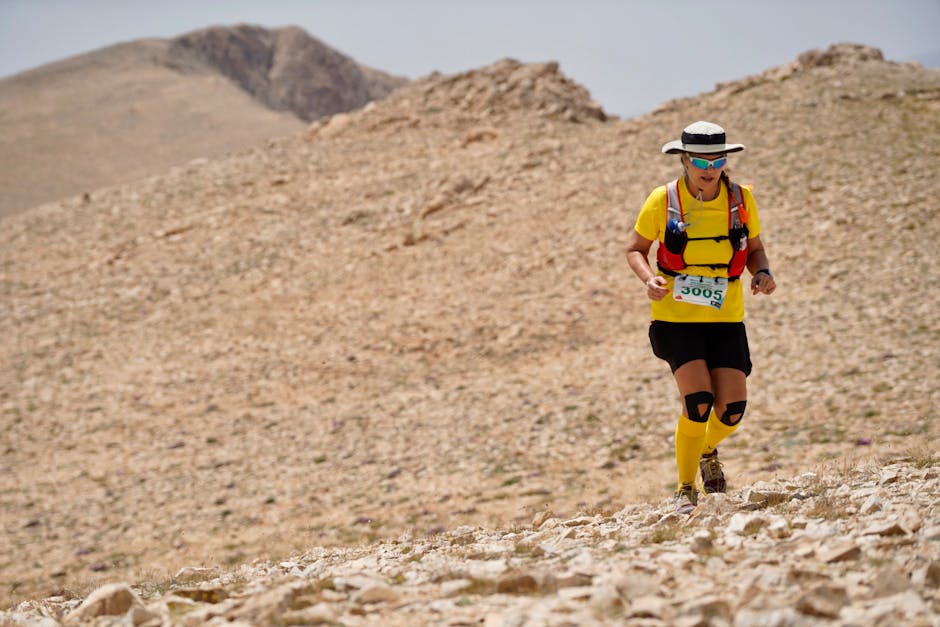
Fastest Known Times (FKT) have become the underground record-setting scene of trail running and mountain sports. You pick a route, you run it as fast as you can, you submit your time, and your run is the new FKT until someone beats it. There are no permits, no entry fees, no race day logistics. Just you, the route, and the clock.
The FKT scene has exploded in recent years. Thousands of routes have recorded FKTs now. Courses range from local 10km trails to 3,000+ km through-hikes. The gear you bring changes dramatically based on which FKT you're attempting. Here's how the sport actually works and how to approach an attempt.
What an FKT Is
An FKT is the fastest recorded time on a defined route. Someone decides "this 25-mile loop is a route" and logs the time. If you beat it, your time becomes the new FKT. Simple. The route is defined by endpoints and a general path (specific turns matter, but minor detours don't invalidate).
The rules: self-supported (you carry everything), supported (support crew), or unsupported (whatever resources the land naturally provides). Each style creates a separate FKT category on the same route.
Self-supported: you can get water and food at natural sources (streams, gas stations on the route) but no personal support crew.
Supported: your crew can meet you at roads to give you food, water, dry clothes. This is like racing a marathon where you have aid stations.
Unsupported: you carry 100% of your food and water from start to finish. No resupply. No help.
FKT record categories (classic ones)
- John Muir Trail (USA) - 340km, 2 day 18 hr FKT (supported)
- Appalachian Trail (USA) - 3,500km, 40 day FKT (supported)
- Barkley Marathons (USA) - technically a race
- Tor des Géants (Italy) - 330km, 69 hour FKT
Route Selection
Most FKT attempts are on named trails or well-defined routes. The Fastest Known Time website (fastestknowntime.com) maintains the primary database. Over 10,000 routes registered.
Beginner FKTs: pick routes with existing records of 2-4 hours. Local trails, common hiking routes. The competition is lower, the route is familiar, and you can attempt multiple times.
Intermediate: multi-hour to multi-day routes. Regional mountains, classic hikes. 12-48 hour efforts.
Advanced: multi-day mountain routes, thru-hikes, ultra-technical terrain. 2-30+ day efforts.
Start with a route you love. You'll spend months training on it, then 1-100+ hours attempting it. Pick something meaningful to you.
Training for Short FKTs (1-8 hours)
Similar to ultramarathon training but with route-specific focus. Run the route regularly during training. Study every section: where the climbs are, where you can push pace, where aid stations or water sources exist.
Structured training: 10-16 weeks of build. Weekly mileage 60-100km. Include one long effort weekly, one quality speed session, and one route-specific session.
Key workouts:
- Long run on the FKT route (or segments of it)
- VO2 max sessions (6-10 x 4-5 min at race pace)
- Tempo runs (30-60 min at threshold)
- Back-to-back long runs (two 3-4 hour days)
Training for Multi-Day FKTs
Multi-day FKTs require different training than single-day efforts. You need durability, not just speed.
Back-to-back long runs become critical. 3 consecutive days of 4-6 hour runs. This teaches your body to recover overnight and perform again.
Nutrition training: practice eating at race pace. What works at mile 50 may not work at mile 100. Test foods, test quantities, test timing.
Sleep management: multi-day FKTs often involve sleep deprivation. Practice running on 4-6 hours of sleep during training.
Mental training: 100+ hours of continuous effort is mental as much as physical. Visualization, mantras, segment thinking all help.
Gear and Weight Management
For short FKTs: minimal kit. Running vest (3-5L), water (1-2L), food, phone. Total 2-4kg.
For medium FKTs (6-24 hour): running pack or hydration vest (8-12L). More food, water management gear, light rain jacket, headlamp, first aid. Total 4-8kg.
For long FKTs (2-7 days): backpack (15-25L). Sleeping system, cook system, extra clothes, multi-day food and water. Total 6-12kg.
For ultra-long FKTs (thru-hikes): backpack (25-45L). Full backpacking gear. 10-15kg base weight.
Weight targets by FKT length
- Under 4 hours: 2-3 kg
- 4-12 hours: 3-5 kg
- 12-48 hours: 5-8 kg
- 2-7 days: 8-12 kg
- Thru-hike: 12-16 kg
Logistics Planning
Pre-attempt: detailed route study. GPS tracks downloaded. Points of interest identified (water, food sources, potential aid). Weather forecast for the attempt window.
Attempt day: start time chosen for optimal conditions. Weather contingency plans. Emergency protocols.
Support: if supported, your crew needs to be at specific points at specific times. Communication matters - you might be running faster or slower than plan.
Documentation: GPS track, time stamps, photos at checkpoints. Required for FKT verification.
Verification Requirements
FKT submissions require verification. Primary requirement: GPS track showing the complete route with time stamps.
Quality GPS tracks: 1-second recording interval, continuous throughout attempt, elevation profile matches actual terrain. Strava records work for most FKTs.
Additional verification: photos at checkpoints, other athletes seeing you, trail cams, or witness signatures at start/finish.
False FKTs happen. Routes have been lost because someone submitted a time that couldn't be verified. If you're serious about your FKT, document aggressively.
Mental Strategy
Short FKTs: intense concentration. You're at maximum effort for 2-8 hours. Rest is minimal. Mental strategy: break the route into segments, focus on current segment only.
Medium FKTs: sustained effort management. Cycles of hard effort, maintenance, recovery within the race. Mental strategy: keep the effort just below breaking point, don't hero it at any section.
Long FKTs: endurance through pain. Days of effort require a different mental approach. Mental strategy: process-focused thinking, don't think about total time remaining.
All FKTs: when things go wrong (weather, injury, fatigue), have a plan for recovery. Often, you can continue with adjusted strategy. Sometimes you must stop - know when.
Common FKT Mistakes
Mistake 1: attempting in bad weather. Weather that slows you 10% destroys your chances. Wait for the window.
Mistake 2: racing the FKT instead of running your pace. The previous FKT holder's pace may not be right for you. Run your sustainable pace.
Mistake 3: insufficient training. FKTs require peak fitness. If you're attempting a 5-hour FKT at 6-hour fitness, you'll fail.
Mistake 4: poor nutrition. 8 hours of effort without food is recoverable. 8 hours without food while running at race pace is not. Plan calories carefully.
Mistake 5: giving up too early. FKTs often have low points that recover. The attempt isn't done until you stop. Don't quit during a low point unless it's dangerous.
Community and Sharing
The FKT community is small but dedicated. Join the Fastest Known Time Facebook groups, follow routes on social media, share your attempts.
Don't be territorial. Many FKT holders want others to attempt their records. A better time makes the sport stronger. Share route beta freely.
Respect the trail. FKT attempts are done on public trails. Leave no trace. Don't mark or alter the route.
The Appeal
FKT racing eliminates the crowd, the hype, and the race-day logistics of traditional running. You get to choose your terrain, choose your conditions, choose your approach. The record is real and measurable, but the experience is personal.
For mountain athletes, FKT racing combines the adventure of self-directed expedition with the measurable achievement of a racing time. It's the best of both worlds for people who love both elements. Start small, build up, and find the routes that matter to you.