Wing Foiling in 2026: The Watersport That Finally Lets a Total Beginner Fly Without a Kite, a Wave, or a Surf Background
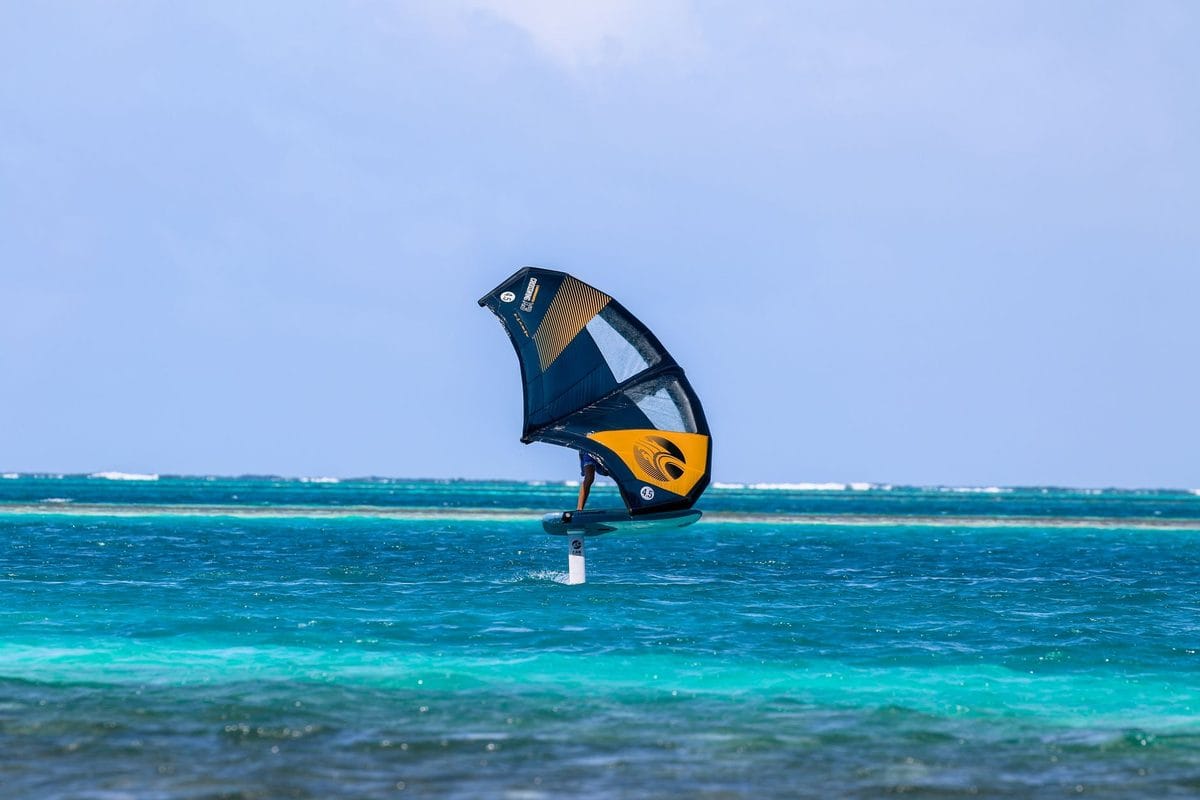
Three summers ago you'd have struggled to find a wing foil board for sale outside a handful of coastal surf shops. Walk down any reservoir launch or sheltered bay in the US this June and you'll see a dozen of them parked in the sand, riders standing on a board the size of a kitchen door, holding what looks like a hand-held kite, lifting clear of the water on a carbon mast and gliding in near-silence. Wing foiling went from fringe curiosity to the fastest-growing watersport in America somewhere around 2024, and the 2026 season is the one where the gear finally got cheap enough and forgiving enough that a guy with no kite or surf background can actually learn it without quitting in frustration.
Here's why it caught on the way it did. Kiteboarding needs steady, clean wind and a launch with no obstacles downwind — get it wrong and the kite drags you across a parking lot. Tow-in surfing needs a jet ski, a driver, and a real wave. Wing foiling needs almost none of that. The wing is a soft, inflatable handheld sail you hold directly, so there are no lines to tangle and nothing to loft you off the beach. You can ride it on a flat lake in 12 knots of breeze. When you crash — and you will, constantly, for the first week — you just let go of the wing and it sits on the surface like a beach toy. That single design difference is why people who'd never touch a kite are willing to try this.
What it actually costs to get on the water
Don't let the high-end marketing fool you into thinking this is a $5,000 hobby. A complete beginner setup in 2026 runs roughly $1,800 to $2,600 if you buy smart. Armstrong, F-One, and Duotone dominate the premium end, but the value play this year is a last-season complete package from Slingshot or Naish — board, foil, and a 5-square-meter wing — which dealers are clearing around $1,900 as the 2026 lines land. The single most important number for a beginner is board volume: get something in the 110- to 130-liter range so it floats you while you're learning to stand. Riders who buy a tiny advanced board first because it looks cooler spend their whole first month swimming.
The foil matters more than the board, and this is where new riders waste money. You want a big, slow, stable front wing — something in the 1,800 to 2,200 square-centimeter range. It lifts early at low speed and is hard to over-fly. The tiny high-aspect race foils that the YouTube edits show off will pitch you off the front the instant you get any speed, and they need wind and skill you don't have yet. Buy the big foil. You'll grow out of it in a season, sell it to the next beginner, and that's fine.
The one piece of safety gear people skip
Wear an impact vest, not just a buoyancy aid. When you fall off a foiling board the mast and wings are carbon-edged and surprisingly sharp, and the board can come back at you in chop. A proper impact vest with a helmet is the standard kit for anyone learning, and the riders who treat it as optional are the ones showing up to the launch with stitches in their shins by August.
The learning curve nobody warns you about
The honest timeline goes like this. Day one you'll spend entirely on your knees, just learning to handle the wing and feel where the power sits. Days two and three you'll get to your feet and ride the board flat on the water, no flying yet, falling every thirty seconds. Somewhere around hour eight to twelve of actual water time, you'll get your first lift — the board breaks free, the drag vanishes, and for about four seconds you're silently flying before you panic and crash. That moment is the hook. Everyone who's done it describes the same thing.
What surprises most people coming from other board sports is that strength barely matters. This isn't windsurfing, where you're muscling a heavy rig out of the water all day. The wing does the work; your job is balance and patience. Plenty of riders in their fifties pick it up faster than gym-strong twenty-somethings, because the twenty-somethings try to force it. The skill is learning to do almost nothing — to let the foil find its own glide and stop fighting it.
Where to learn this summer
The best US wing foil water in June isn't the ocean — it's protected, flat, thermally reliable inland and bay water. The Columbia River Gorge around Hood River fires nearly every afternoon from June onward and has the densest cluster of schools in the country. The Outer Banks sound side gives you waist-deep flat water for miles, which is exactly what you want when you're falling constantly and don't want to be swimming back from the deep. San Francisco Bay is world-class but genuinely too windy and cold for a first lesson, despite what the locals will tell you. And any large, flat reservoir with a consistent afternoon thermal — plenty exist across the Southwest and Texas — will teach you the basics fine.
Take two lessons before you buy anything. A school will have you on the right-volume board with the right foil, on flat water, in the right wind, and a two-hour lesson will save you a month of self-taught flailing. Most charge $120 to $180 for a session including gear. Spend the money. The guys who buy a used kit off marketplace and teach themselves on a rocky lakeshore in gusty wind are the ones who give up and list the gear back for sale in September.
Rig the big foil, find flat water, and book the lesson. The first silent glide is four seconds long and it rewrites what you thought a summer on the water could be.