Badwater 135: Inside the World's Toughest Foot Race Through Death Valley at 130°F
The Badwater 135 runs through Death Valley in July heat that softens shoe soles on the asphalt. Here's how finishers actually manage the heat, the climb, and the sodium math.
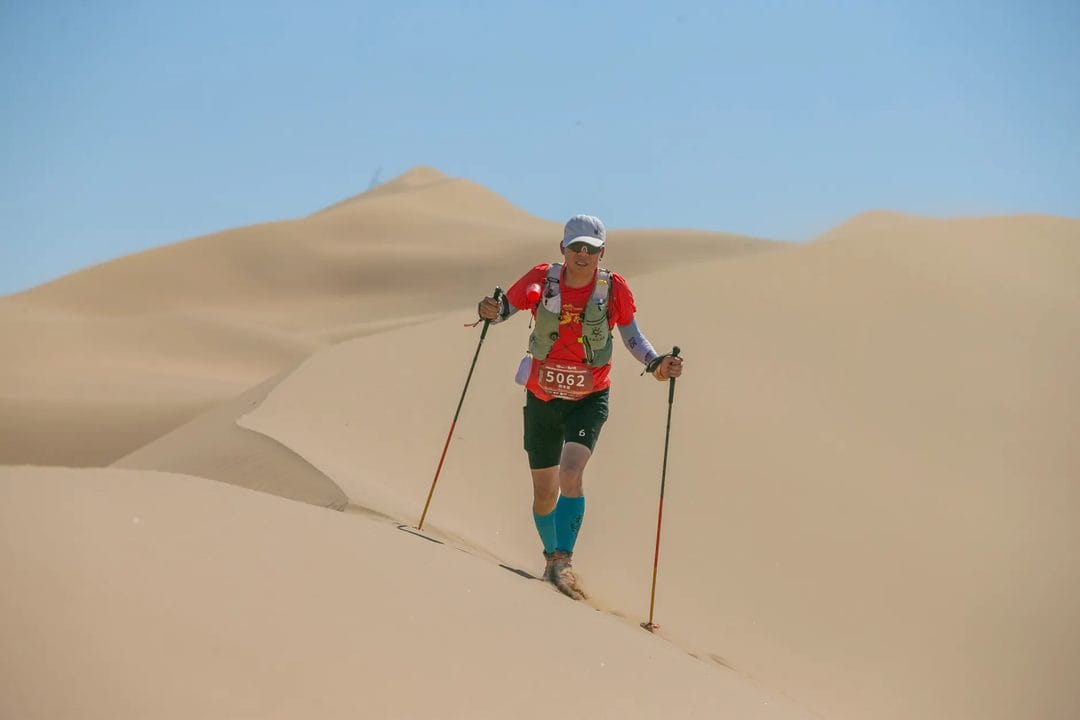
The Badwater 135 starts at the lowest point in the Western Hemisphere — 282 feet below sea level, on a salt flat in Death Valley National Park — and finishes 135 miles later at Whitney Portal, the trailhead for the highest peak in the contiguous United States. Runners cover that distance in one continuous push, no stage breaks, through July heat that regularly hits 120°F on the asphalt and has been measured as high as 130°F at ground level along the course. AdventureCORPS, which has organized the race since its modern format began in 1989, caps the field at around 100 runners chosen by application, not lottery — this is not a race you simply sign up for.
The event runs in mid-July specifically because that's when Death Valley reliably delivers its most extreme heat, which tells you everything about what kind of race this actually is. It isn't a distance challenge with a heat problem attached — it's a heat-survival exercise that happens to be 135 miles long, and every serious runner's preparation reflects that priority ordering exactly.
The heat math that decides who finishes
Road surface temperatures in Death Valley in July regularly exceed 150°F to 170°F — hot enough that shoe soles have been known to soften and separate mid-race, a failure mode almost unique to this event. Runners deal with this by running on the white line at the road's edge, which reflects more heat than the darker asphalt center, shaving a measurable few degrees off the radiant heat hitting their feet and legs.
Core body temperature management is the entire race. Elite competitors carry ice bandanas around their necks, dump ice down their shirts at every crew stop, and some run with cooling vests lined with ice packs that need replacing every 20 to 30 minutes. Crew vehicles — every entrant is required to have a support crew and vehicle, no exceptions — carry coolers stocked with 40 to 60 pounds of ice for a single runner across the full 135 miles, restocked at gas stations along the sparse route through Stovepipe Wells and Panamint Springs.
Hydration and sodium at a scale most runners never approach
- Elite finishers commonly drink 1.5 to 2 liters of fluid per hour during the hottest midday stretch — more than double what a marathon runner needs in mild conditions
- Sodium intake runs 1,000 to 1,500 mg per hour through electrolyte capsules and salted foods, because sweat losses at this heat and duration can trigger hyponatremia just as easily as dehydration if fluid isn't matched with sodium
- Some runners weigh themselves at every crew stop and adjust fluid and salt intake based on the number, not on thirst, because thirst sensation becomes an unreliable signal after 12-plus hours in extreme heat
Getting the sodium-to-water ratio wrong in either direction ends races. Too much water without matching sodium causes hyponatremia — a genuinely dangerous, sometimes fatal electrolyte imbalance that has taken down elite ultrarunners at far shorter distances than Badwater. Too little water risks the more familiar heat exhaustion and kidney strain that shows up on the medical tent's most common admission list every single year the race runs.
The climb nobody talks about until mile 90
Most coverage of Badwater fixates on the heat, and for good reason, but the course also climbs roughly 14,600 feet of total elevation gain across its length, including a brutal stretch up to the Whitney Portal finish that gains over 4,700 feet in the final 13 miles alone. Runners hit that climb after 120-plus miles already run through the day's worst heat, which means the muscular and cardiovascular demand of a genuine mountain ascent lands on a body that's already spent most of its glycogen and a meaningful share of its blood volume to sweat.
This is where night running becomes both relief and hazard. Temperatures drop from the 120s into the 80s and 90s after dark, which sounds like relief and mostly is — but runners who've been awake for 24-plus hours by that point are now fighting sleep deprivation and cumulative fatigue on a technical climbing section, often with a pacer required specifically for the overnight and mountain sections under the race's own safety rules.
Gear that separates finishers from DNFs
Shoes matter more here than almost any other ultra distance — a half-size to full-size up from normal marathon fit, both to accommodate the swelling that comes with 30-plus hours on feet and to leave room for the ice some runners pack directly into their shoes at crew stops. Hoka and Altra both show up repeatedly in finisher gear lists, prized for wide toe boxes that tolerate the swelling better than a narrower racing flat.
A crew that's run support before beats a crew of well-meaning friends every time, and this isn't a minor logistics note — it's arguably as decisive as the runner's own training. Crews need to recognize early signs of heat illness the runner themselves may be too far gone to self-report, manage a vehicle safely on a narrow two-lane highway shared with regular traffic, and make real-time calls about pace and cooling that a first-timer crew simply doesn't have the pattern recognition to make under pressure.
Why anyone chooses to do this
Roughly 85 to 95 finishers cross the line most years out of a field capped near 100, which puts the finish rate meaningfully higher than its reputation suggests — this isn't a race where most entrants fail, it's a race where most entrants who show up properly prepared and properly crewed actually make it, which says something about how much the preparation itself filters the field before race day even arrives.
The runners who talk about Badwater afterward tend to skip the mystical framing and go straight to specifics: the exact mile marker where the heat finally broke them mentally, the flavor of electrolyte drink that stopped tasting like anything by hour 20, the moment their crew chief made a call they didn't want to hear but needed to. That's the real texture of an event built entirely around managing one variable — heat — for longer and more completely than almost any other organized endurance event on the calendar.